

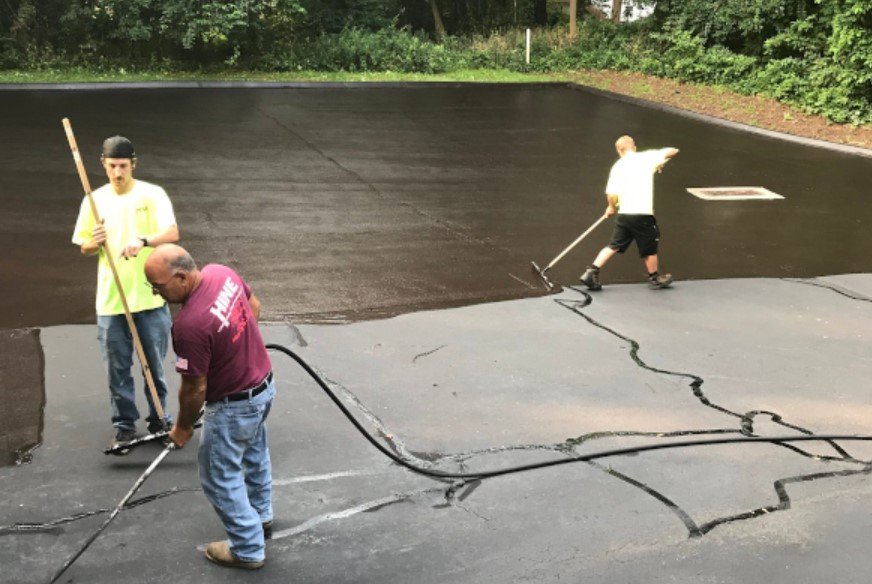
A driveway often looks solid and durable on the surface, but asphalt is constantly exposed to weather changes, moisture, oil spills, and temperature stress. When winter arrives, these pressures become even more damaging. Small cracks can quickly expand, water can seep inside, and freezing temperatures can break apart the structure from within. That is why Sealcoating driveway before winter is one of the most effective maintenance steps homeowners can take to extend the life of their asphalt surface while avoiding costly repairs later.
Sealcoating works like a protective shield. It creates a smooth, water-resistant layer over the asphalt that blocks harmful elements and slows down natural wear. When applied at the right time—especially before freezing weather—it helps preserve both appearance and structural strength.
1. Protection Against Freeze-Thaw Damage
Winter weather brings repeated freeze-thaw cycles. Water enters small cracks in the asphalt during the day, then freezes and expands at night. This expansion pushes the cracks wider and deeper over time, leading to potholes and surface breakdown.
By choosing Sealcoating driveway before winter, homeowners reduce water penetration significantly. The sealcoat fills tiny surface gaps and forms a barrier that prevents moisture from entering the pavement. This simple preventive step greatly reduces the risk of winter-related cracking and long-term structural damage.
Without sealcoating, even a well-built driveway can deteriorate rapidly during harsh winters. With it, the asphalt remains flexible and protected.
2. Extends the Lifespan of Your Asphalt Driveway
Asphalt driveways naturally degrade over time due to sunlight, rain, vehicle traffic, and oxidation. Oxygen exposure causes the asphalt binder to dry out, making it brittle and prone to cracking. Sealcoating slows down this aging process.
Applying Sealcoating driveway before winter acts as a renewal treatment for the surface. It restores the dark, rich finish of asphalt while reinforcing its durability. Regular sealcoating every few years can extend a driveway’s lifespan by many years, reducing the need for complete resurfacing or replacement.
Think of it like applying sunscreen and moisturizer at the same time—it protects and preserves the material underneath.
3. Prevents Costly Repairs and Structural Damage
One of the biggest benefits of preventive maintenance is avoiding expensive repairs. Small cracks may seem harmless at first, but once water penetrates and freezes, they expand quickly. Over time, this leads to potholes, uneven surfaces, and base layer damage.
By investing in Sealcoating driveway before winter, homeowners stop this cycle before it begins. Sealcoating fills surface imperfections and seals the top layer, preventing minor issues from turning into major structural problems.
Repairing potholes or repaving sections of asphalt can be significantly more expensive than routine sealcoating. In this way, sealcoating is not just maintenance—it is a cost-saving strategy.
4. Improves Appearance and Curb Appeal
Beyond protection, sealcoating also enhances the visual appeal of a driveway. Over time, asphalt naturally fades from deep black to a dull gray due to oxidation and sun exposure. This aging effect can make an entire property look older and less maintained.
With Sealcoating driveway before winter, the surface is refreshed to a clean, dark finish that instantly improves curb appeal. This is especially valuable for homeowners preparing to sell their property or simply wanting a more polished outdoor appearance.
A well-maintained driveway also creates a positive first impression, signaling that the property is cared for and structurally sound.
5. Resistance to Salt, Chemicals, and Winter Debris
During winter, roads and driveways are often exposed to salt, sand, and de-icing chemicals. While these materials help manage ice, they can be harsh on asphalt surfaces. Salt, in particular, can break down the binder in asphalt over time, leading to surface erosion.
When you apply Sealcoating driveway before winter, it creates a protective layer that minimizes direct contact between the asphalt and these damaging substances. This barrier reduces chemical absorption and helps the surface withstand winter maintenance materials more effectively.
Additionally, sealcoating makes it easier to clean off dirt, snow, and debris, keeping the driveway safer and more manageable throughout the season.
6. Enhances Surface Flexibility and Durability
As temperatures drop, asphalt becomes more rigid and prone to cracking under pressure from vehicles and environmental stress. Sealcoating helps maintain surface flexibility by protecting the asphalt binder from drying out.
With Sealcoating driveway before winter, the driveway retains better elasticity, allowing it to handle temperature fluctuations and heavy loads more effectively. This added resilience reduces the chances of sudden cracking during cold weather conditions.
A flexible driveway is a durable driveway, especially in climates where winter temperatures fluctuate frequently.
7. The Best Time for Sealcoating Before Winter
Timing is crucial for effective sealcoating. The ideal conditions are dry weather with temperatures above 10°C (50°F) for at least 24–48 hours after application. This allows the sealant to cure properly and bond with the asphalt surface.
Applying Sealcoating driveway before winter ensures the protective layer is fully cured before freezing temperatures arrive. If applied too late in the season, the sealcoat may not set properly, reducing its effectiveness.
For best results, homeowners should plan sealcoating in early autumn or late summer, depending on their local climate.
Conclusion
Maintaining an asphalt driveway is not just about fixing problems—it is about preventing them before they begin. Winter is one of the harshest seasons for pavement surfaces, making early preparation essential. By investing in Sealcoating driveway before winter, homeowners can protect their driveways from freeze-thaw damage, chemical exposure, water penetration, and long-term wear.
This simple maintenance step improves appearance, extends lifespan, reduces repair costs, and strengthens the overall structure of the asphalt surface. In the long run, sealcoating is one of the most practical and cost-effective ways to ensure a driveway remains strong, smooth, and visually appealing year after year.
